Christmas Sublimation: Elevating Holiday Gifting with Unique, Editable Designs
The holiday season has always been a time for connection, creativity, and the exchange of thoughtful gestures. In recent years, however, the way we approach gift-giving and seasonal decoration has shifted dramatically. Consumers are moving away from mass-produced items found on big-box store shelves, seeking instead personalized, high-quality products that tell a story or reflect individual style. This cultural pivot has placed Christmas sublimation at the forefront of modern crafting and small business strategies. It is no longer just a niche hobby; it is a robust method for creating unique merchandise that resonates with friends, family, and customers alike.
At its core, sublimation printing allows for full-color, durable designs to be infused directly into polyester-based substrates or special coatings. Unlike traditional screen printing or heat transfer vinyl, sublimation does not leave a heavy layer on top of the material. Instead, the ink becomes part of the fabric or surface itself. This results in vibrant, scratch-resistant imagery that withstands washing and wear—qualities essential for holiday apparel, mugs, ornaments, and home decor. When you combine this technology with premium digital assets, such as a unique design package containing 1 Adobe Illustrator Ai File, 1 Adobe Illustrator Eps10 File, and 1 Transparent Png File, the possibilities for customization become nearly endless.
The Evolution of Holiday Customization
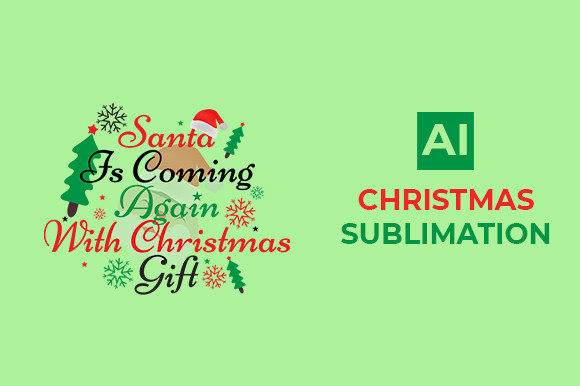
Why is there such a surge in attention toward sublimation specifically during the holidays? The answer lies in the changing expectations of the modern consumer. Today's buyers, whether they are purchasing for themselves or sourcing gifts for others, value authenticity. They want items that feel bespoke. A standard red sweater is nice, but a sweater featuring a specific, witty graphic about "Santa bringing a gift again this season" created with high-resolution vector art creates an emotional connection.
This trend is also driven by the accessibility of technology. Ten years ago, achieving professional-grade custom prints required expensive industrial equipment. Today, desktop sublimation printers and compact heat presses have democratized the process. Freelancers, stay-at-home parents, and side-hustle entrepreneurs can now produce boutique-quality goods from a home office or garage. This shift has lowered the barrier to entry for creative businesses, allowing for a more diverse marketplace where 100 editable design options can be tailored to specific niches within seconds.
Furthermore, the workflow for creators has evolved. The demand for files that are ready to use across different software platforms is higher than ever. Designers and crafters do not want to waste time tracing images or dealing with pixelated graphics. They need versatile formats. Having access to both raster (PNG) and vector (AI, EPS) files ensures that a design can be scaled up for a large blanket or down for a small ornament without losing clarity. This flexibility is crucial for maintaining professional standards in a competitive market.
Practical Applications for Creators and Businesses
For those looking to leverage Christmas sublimation, understanding the practical implications of file formats is key to success. Let's break down how these assets fit into a modern production workflow.
- Adobe Illustrator Ai File: This is the native format for Illustrator users. It preserves layers, editing capabilities, and vector paths. For a professional designer, this means they can tweak colors to match a specific brand palette or modify text elements to personalize a gift for a specific recipient instantly.
- Adobe Illustrator Eps10 File: Encapsulated PostScript is a universal vector format. It is compatible with a wide range of design software beyond Illustrator, including CorelDRAW and Inkscape. This ensures that regardless of the tool a creator prefers, the design remains crisp and editable.
- Transparent Png File: Perfect for quick imports into mockup generators, Canva, or direct-to-sublimation software. The transparency ensures that only the design prints, leaving the background of the substrate (like a white mug or a colored shirt) visible and clean.
Consider a small business owner preparing for the Q4 rush. By utilizing a comprehensive design bundle that includes these three file types, they can rapidly prototype new products. They might take a festive graphic, adjust the color scheme in the AI file to create a "gold and navy" variation for a corporate client, and then use the PNG to quickly visualize how it looks on a tumbler. This efficiency allows them to respond to market trends in real-time, rather than being stuck with static inventory.
Meeting User Expectations in a Digital Age
The modern user expects speed and quality. When someone orders a custom holiday item, they often envision something that looks like it was designed specifically for them. Sublimation delivers on this promise because of its ability to handle complex gradients, photographs, and intricate details that other methods struggle with. However, the foundation of a great sublimation product is the source file.
Using low-resolution images leads to blurry, unprofessional results that disappoint customers. This is why starting with high-quality, unique design assets is non-negotiable. A design set that offers 100 editable variations or components allows the creator to mix and match elements. Perhaps a customer wants a design that says "Santa will bring you a gift again this season" but wants to add their family name underneath. With the right vector files, this is a five-minute task. Without them, it might be impossible.
Moreover, the sustainability aspect of sublimation cannot be overlooked. Because the ink bonds with the material, there is less waste associated with failed prints compared to some other methods, and the longevity of the product means it won't end up in a landfill after one season. This aligns with the growing consumer preference for eco-conscious purchasing decisions.
Strategic Recommendations for the Season
If you are planning to dive into Christmas sublimation projects this year, whether for personal joy or profit, here are some grounded recommendations to ensure success:
- Invest in Quality Blanks: Sublimation only works on polyester-rich fabrics or coated hard surfaces. Ensure your mugs, shirts, and ornaments are specifically rated for sublimation to guarantee color vibrancy and durability.
- Master Color Management: Screens display color differently than printers. Always run test prints on paper before committing to expensive substrates. Understanding ICC profiles for your specific printer and ink combination is vital for accurate reds and greens.
- Leverage Versatile Assets: As mentioned, having access to AI, EPS, and PNG formats gives you the freedom to adapt. Don't limit yourself to one file type. Use the vector files for scaling and the PNGs for speed.
- Focus on Niche Themes: While generic "Merry Christmas" signs are common, specific themes resonate more deeply. Designs that cater to specific professions, hobbies, or family dynamics (like the recurring theme of Santa's reliable gift delivery) often sell better because they feel more personal.
- Plan Your Workflow: The holidays arrive quickly. Organize your digital library now. Tag your files by theme, color, and file type so you can retrieve the exact asset you need without friction during the busy season.
The Future of Festive Crafting
Looking ahead, the integration of digital design and physical crafting will only deepen. We are seeing a rise in hybrid workflows where digital artists collaborate with makers to produce limited-run collections. The availability of professional-grade files like 1 Adobe Illustrator Ai File and 1 Adobe Illustrator Eps10 File bridges the gap between digital conception and physical reality.
This evolution empowers individuals to become creators rather than just consumers. It fosters a community where sharing knowledge, tips, and resources—like saying "Thanks In Advance" to fellow creators who share their insights—is common practice. The barrier between the professional marketer and the hobbyist is blurring, united by the tools they use and the desire to create something meaningful.
In conclusion, Christmas sublimation represents more than just a printing technique; it is a vehicle for expression. It allows us to take the abstract joy of the season and manifest it into tangible objects that can be held, worn, and cherished. By utilizing high-quality, editable design resources, creators can meet the sophisticated demands of today's market while enjoying the creative process. Whether you are making a single gift for a loved one or launching a seasonal product line, the combination of advanced sublimation technology and versatile digital assets provides the perfect foundation for a successful and spirited holiday season.
As you prepare your press and organize your files, remember that the true value lies in the uniqueness of what you create. With the right tools and a bit of creativity, you can ensure that Santa—and your own craftsmanship—brings something special to everyone on your list this year.