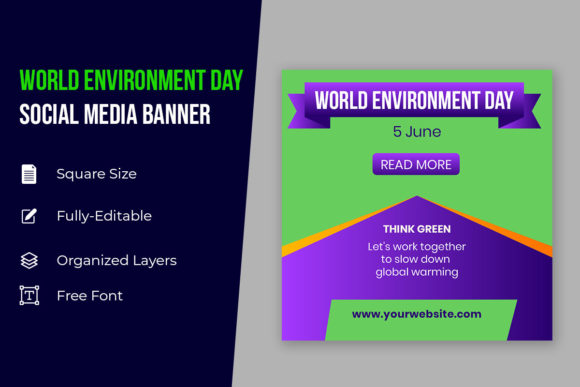
Maximizing Impact with a World Environment Day Social Media Banner for Global Awareness
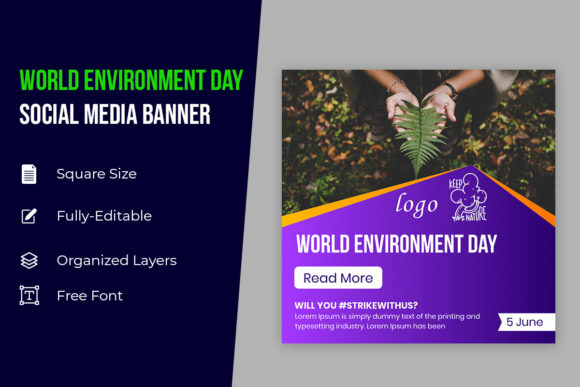
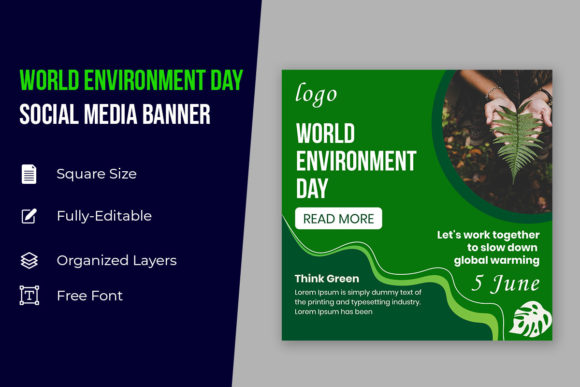
In the digital age, environmental advocacy has transcended physical rallies and printed pamphlets to find a powerful home on social media platforms. Every year on June 5th, the global community unites to observe World Environment Day, a United Nations-led initiative designed to inspire action for the protection of our planet. For organizations, educators, content creators, and businesses, participating in this event is not just about posting a message; it is about creating a visual narrative that captures attention, educates the audience, and drives engagement. The cornerstone of this digital participation is the World Environment Day social media banner. A well-crafted visual asset serves as the primary vehicle for conveying the year's specific theme, whether it be combating plastic pollution, restoring ecosystems, or addressing climate change.
The effectiveness of a campaign often hinges on the quality and adaptability of its visual elements. A generic image may suffice for a personal post, but professional entities require assets that align with brand identity while adhering to the universal symbols of the movement. This is where the concept of the "Green Eco Earth" becomes central. Utilizing vector illustrations and high-resolution backgrounds allows designers to create imagery that is both scalable and impactful across various devices. When these elements are packaged into editable formats like PSD, AI, EPS, and PDF, they empower users to customize the message without compromising on design integrity.
The Strategic Value of Customizable Visual Assets
The landscape of social media is crowded. To cut through the noise, a World Environment Day card or banner must be visually striking and immediately recognizable. However, static images often lack the flexibility needed for diverse marketing strategies. This is why the availability of fully layered, editable files is crucial. When a design template includes Smart Objects, it transforms a static graphic into a dynamic tool. Users can swap out placeholder images with their own photography, adjust color palettes to match corporate branding, or modify typography to highlight specific calls to action.
Consider the workflow of a marketing team preparing for June 5th. They may need to produce variations of the same core design for Instagram, LinkedIn, Facebook, and Twitter. Each platform has different optimal dimensions and audience expectations. A template built with a resolution of 72 DPI in RGB color mode, specifically sized at 1080×1080 pixels, provides a perfect square format ideal for Instagram feeds and posts. Because the file is layered, the team can easily resize elements or export cropped versions for stories or headers without losing quality. The inclusion of vector-based formats like AI and EPS ensures that if the design needs to be scaled up for a website header or a printed flyer, the graphics remain crisp and free of pixelation.
Furthermore, the ability to edit every main element fosters creativity. Designers are not bound by the original creator's vision; instead, they use the base structure as a foundation. They can integrate local statistics, specific event details, or unique slogans that resonate with their specific demographic. This level of customization ensures that the final output feels authentic rather than templated, which is essential for building trust with an audience increasingly skeptical of generic corporate messaging.
Understanding the Technical Specifications for Digital Excellence
To truly leverage a World Environment Day background or illustration pack, one must understand the technical underpinnings that make these files versatile. The standard for web graphics is the RGB color space, which offers a broader range of colors suitable for screens compared to the CMYK space used in print. A design created in 72 DPI (dots per inch) is optimized for fast loading times on websites and social apps, ensuring that high-quality visuals do not result in sluggish user experiences.
The file formats included in a comprehensive design package play distinct roles. The PSD (Photoshop Document) file is the workhorse for raster-based editing, allowing for complex layer manipulation, masking, and effect application. It is indispensable for photographers and digital artists who need to blend real-world images with graphical elements. On the other hand, AI (Adobe Illustrator) and EPS (Encapsulated PostScript) files are vector-based. These are critical for maintaining the sharpness of logos, icons, and text regardless of scaling. Having access to a PDF version provides a universal preview format that can be viewed on almost any device without specialized software, facilitating easy sharing and approval processes within teams.
Moreover, the organization of these files matters. A professional package typically includes over 100 layers, meticulously named and grouped. This structure saves hours of work, as users do not have to hunt for the specific layer controlling the background gradient or the text overlay. The presence of a dedicated information file and a help guide further enhances usability, often providing links to free fonts used in the design. This attention to detail ensures that even users with intermediate design skills can achieve professional results quickly.
Applications Across Different Sectors
The utility of a high-quality World Environment Day vector illustration extends far beyond simple social media posts. Various sectors can adapt these assets to serve unique purposes, amplifying the reach of environmental messages.
- Corporate Sustainability Reports: Businesses can use the editable backgrounds to create cover pages for digital sustainability reports or internal newsletters, reinforcing their commitment to eco-friendly practices.
- Educational Institutions: Schools and universities can customize the cards to announce campus clean-up drives, tree-planting events, or educational webinars, making the materials engaging for students.
- Non-Profit Organizations: NGOs often operate with limited budgets. Access to free-font-compatible, fully editable templates allows them to produce high-end marketing materials without the cost of hiring a graphic designer for every single asset.
- E-Commerce and Retail: Online stores can integrate the "Green Eco Earth" motifs into their homepage banners to highlight eco-friendly product lines or announce donations to environmental causes tied to sales.
In each of these scenarios, the core asset remains the same, but the application shifts to meet the specific goals of the user. The flexibility of the Smart Objects allows a retailer to insert a product image into the center of the earth graphic, while a school might replace it with a photo of students participating in a recycling program. This adaptability is what makes such resources invaluable in a multi-faceted digital ecosystem.
Design Trends and the Psychology of Green Imagery
When selecting or customizing a World Environment Day social media banner, understanding current design trends and color psychology can significantly enhance engagement. The color green is universally associated with nature, growth, and harmony. However, modern design often pairs green with vibrant blues to represent water and sky, or earthy tones to signify soil and stability. A successful design balances these colors to evoke a sense of hope and urgency without causing "eco-anxiety."
Vector illustrations have gained popularity over photorealistic images for social media because they tend to be cleaner and more stylized. They allow for the simplification of complex environmental concepts into digestible visual metaphors. For instance, a vector depiction of hands holding a globe can symbolize care and responsibility more abstractly and powerfully than a literal photograph. These illustrations also load faster and scale better on mobile devices, which is where the majority of social media consumption occurs.
Typography also plays a pivotal role. The choice of font can dictate the tone of the message. Bold, sans-serif fonts convey strength and immediacy, suitable for calls to action like "Act Now." Conversely, softer, rounded typefaces may be better suited for educational content or community-building messages. Since many premium templates utilize free fonts, users can legally download and install the exact typeface intended by the designer, ensuring the visual hierarchy and aesthetic balance remain intact.
Best Practices for Implementation and Distribution
Once the World Environment Day card or banner is customized, the strategy for distribution is just as important as the design itself. Timing is critical; campaigns should begin ramping up a week before June 5th to build anticipation and continue afterward to sustain momentum. Consistency is key. Using a unified visual theme across all platforms creates a cohesive brand experience. If a company uses a specific "Green Eco Earth" motif on Instagram, that same visual language should appear in email signatures, website headers, and LinkedIn articles.
Engagement features should also be considered during the customization phase. Leaving space in the design for hashtags, handles, or QR codes can drive traffic to landing pages or petition sites. The editable nature of the source files makes adding these elements seamless. Additionally, creating a series of posts using variations of the same template can tell a story over time. One post might focus on the problem, the next on the solution, and the final one on the call to action, all tied together by the consistent visual style of the template.
It is also worth noting the importance of crediting sources and respecting licensing terms. When using templates that offer free fonts or specific assets, ensuring compliance with usage rights protects the user from legal issues. Most professional packages come with clear documentation regarding usage, often encouraging users to rate the artwork or contact the creator for custom modifications. This symbiotic relationship between creator and user fosters a community of shared resources, ultimately raising the overall quality of environmental advocacy materials available online.
Future-Proofing Your Environmental Campaigns
Investing time in mastering these editable design tools pays dividends beyond a single day. The skills acquired in manipulating PSD and AI files, understanding layer structures, and optimizing images for web resolution are transferable to future campaigns. Whether it is for Earth Hour, Ocean Conservancy days, or local initiatives, having a library of customizable, high-quality assets allows organizations to react quickly and professionally to emerging environmental news or opportunities.
Ultimately, the goal of utilizing a World Environment Day background or illustration set is to amplify the message of conservation. By removing technical barriers through user-friendly, fully layered, and smart-object-enabled templates, designers and non-designers alike can focus on what truly matters: inspiring action. The visual appeal of a well-designed banner draws the eye, but the clarity of the message, facilitated by thoughtful customization, captures the heart and mind. As we face growing environmental challenges, the ability to communicate effectively through digital media becomes an essential tool in the global effort to protect our planet.
In conclusion, the integration of professional-grade design assets into social media strategies represents a significant leap forward for environmental communication. From the technical precision of 1080×1080 pixel resolutions to the creative freedom offered by vector illustrations, every element serves a purpose. By leveraging these resources, individuals and organizations can ensure their voice is heard clearly in the global conversation, turning a simple social media post into a catalyst for real-world change.