Mastering Digital Engagement Through Strategic Social Media Buttons Collection Design
In the contemporary digital landscape, the interface between a brand and its audience is often defined by micro-interactions. Among these, the humble social media button serves as a critical gateway, transforming passive viewers into active participants. The evolution of Social Media Buttons Collection Design has moved far beyond simple flat icons; it now encompasses a sophisticated array of vector 3D social network like icons, abstract conceptual illustrations, and isolated design elements that drive analytics, promotion, and marketing success. For professionals, creators, and business owners alike, understanding the nuances of these design assets is essential for optimizing user experience and maximizing return on investment in social media marketing (SMM).
The Evolution from Flat to Dimensional Interfaces
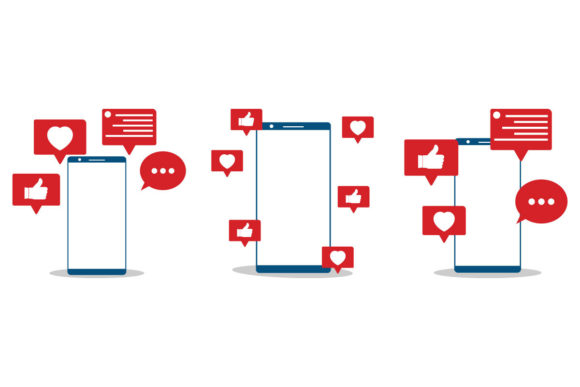
For over a decade, the web design industry adhered strictly to flat design principles, stripping away gradients, shadows, and textures to prioritize speed and clarity. However, recent trends indicate a significant shift toward depth and tactility. The introduction of vector 3D social network like icons represents this paradigm shift. These assets are not merely aesthetic choices; they leverage psychological cues that encourage interaction. A three-dimensional "Like" button, rendered with soft lighting and realistic depth, mimics physical objects, making the action of clicking feel more tangible and rewarding.
This transition is particularly relevant for app developers and web designers aiming to reduce bounce rates. When a user encounters a social media sign that appears lifelike and inviting, the perceived value of the interaction increases. Abstract conceptual illustrations isolated on white backgrounds allow designers to integrate these elements seamlessly into diverse layouts without clashing with existing color schemes. Whether utilized in a dark mode interface or a light-themed blog, these isolated vectors provide the flexibility needed for modern responsive design.
Strategic Implementation for Business and Marketing
For business owners and marketing strategists, the selection of a Social Media Buttons Collection Design is a decision that impacts conversion funnels. The primary objective is to guide the user journey from content consumption to community engagement. This involves a strategic placement of "Like," "Comment," and "Follow" triggers that align with user behavior patterns.
- Visibility vs. Intrusiveness: Effective design balances prominence with subtlety. Buttons must be noticeable enough to invite action but not so aggressive that they disrupt the reading flow.
- Contextual Relevance: The style of the icon pack should match the brand voice. A financial institution may opt for sleek, minimalistic vectors, while a gaming community might benefit from vibrant, abstract 3D illustrations.
- Platform Specificity: Differentiating between platforms is crucial. Users recognize specific color codes and logo shapes instantly. A well-curated icon pack ensures that the Facebook "f," the Twitter bird, or the LinkedIn "in" are instantly recognizable, reducing cognitive load.
In the realm of SEO and analytics, these buttons serve as data collection points. Properly implemented social signals can indirectly influence search engine rankings by driving traffic and increasing dwell time. Therefore, the design of these elements must support technical performance, ensuring that high-resolution vector graphics do not compromise page load speeds.
Design Elements for Web, Internet, and App Ecosystems
The versatility of modern icon packs extends across various digital ecosystems. Whether designing for a native mobile application, a progressive web app, or a traditional corporate website, the underlying assets must remain consistent yet adaptable. Design elements for web, internet, app, analytics, promotion, marketing, SMM, and business require a unified visual language.
Consider the workflow of a content creator launching a new portfolio. They require a cohesive set of icons that look professional on a desktop monitor yet remain crisp on a smartphone screen. Vector-based assets are indispensable here. Unlike raster images, vectors scale infinitely without losing quality. This ensures that a "Follow" button looks sharp on a 4K display and a low-resolution tablet alike. Furthermore, abstract conceptual illustrations allow for customization. Designers can tweak colors, lighting angles, and depths to create a unique brand identity that stands out in a saturated market.
Optimizing for User Experience (UX)
User experience is the cornerstone of effective digital design. When integrating a Social Media Buttons Collection Design, several UX principles must be considered to ensure accessibility and usability.
- Touch Targets: On mobile devices, buttons must meet minimum size requirements to prevent mis-taps. A 3D icon might look small visually, but its clickable area (hit box) must be sufficiently large.
- Feedback Mechanisms: Interactive elements should provide immediate feedback. When a user clicks a 3D "Like" icon, the animation should respond instantly, perhaps depressing the button or changing its color state to confirm the action.
- Accessibility Standards: All social media signs must include appropriate ARIA labels and alt text. This ensures that screen readers can interpret the function of the button for users with visual impairments, maintaining inclusivity across the web.
The Role of Abstract Conceptual Illustrations in Branding
Beyond standard logos, there is a growing demand for abstract conceptual illustrations that represent the idea of social connectivity rather than just the platform itself. These artistic interpretations are invaluable for presentations, marketing materials, and educational content where literal logos might be distracting or legally restrictive. An abstract representation of a "network" or "community" can convey complex ideas about connectivity and data flow without tying the visual to a specific corporation.
These illustrations, often isolated on white backgrounds for easy integration, allow educators and researchers to visualize social dynamics. For instance, a study on viral marketing trends might use stylized 3D nodes and connections to demonstrate how information spreads, utilizing the aesthetic of social media icons without infringing on trademarks. This approach fosters creativity and allows for a broader interpretation of digital engagement.
Technical Considerations for Developers
For the technical team responsible for implementation, the choice of asset format is critical. While PNGs and JPEGs are common, SVG (Scalable Vector Graphics) is the gold standard for Social Media Buttons Collection Design. SVGs offer small file sizes, CSS stylability, and resolution independence. When working with complex 3D renders converted to vector formats, developers must ensure that the code remains clean and optimized.
Furthermore, integration with analytics tools is paramount. Each button should be tagged with event tracking parameters. This allows businesses to measure exactly which design variations yield the highest click-through rates. A/B testing different icon styles—such as comparing a flat design against a 3D rendered version—can provide actionable insights into user preferences. Data-driven design decisions lead to more effective marketing campaigns and higher engagement metrics.
Leveraging Trends in Promotion and SMM
Social Media Marketing (SMM) is a rapidly evolving field. What works today may become obsolete tomorrow. Currently, the trend leans towards personalization and interactivity. Static icons are being replaced by micro-animated sequences that catch the eye without being annoying. A "Follow" button that subtly pulses or a "Like" icon that bursts with confetti upon interaction can significantly boost engagement rates.
Professionals in promotion and advertising must stay ahead of these curves. Utilizing a diverse library of design elements allows for rapid iteration. If a campaign targets Gen Z, the visual style might lean towards bold, neon-infused 3D aesthetics. Conversely, a B2B campaign might require understated, professional vector icons. The availability of comprehensive icon packs empowers marketers to tailor their visual strategy to specific demographics effortlessly.
Future-Proofing Digital Assets
As we look toward the future of the internet, including the metaverse and augmented reality (AR) interfaces, the role of social media signs will expand. The current generation of vector 3D social network like icons serves as a bridge to these immersive environments. In AR applications, social interactions will likely occur in 3D space, requiring assets that possess depth and spatial awareness. By adopting 3D-centric design languages now, businesses and creators are future-proofing their digital presence.
The isolation of these elements on white backgrounds also facilitates their use in emerging technologies where background removal and compositing are frequent tasks. Whether projecting a social feed onto a smart glass display or integrating community features into a virtual world, the foundational design elements remain the same: clear, recognizable, and inviting symbols of connection.
Conclusion on Design Utility
The strategic selection and implementation of a Social Media Buttons Collection Design is more than a cosmetic exercise; it is a fundamental component of digital strategy. From enhancing user experience through tactile 3D elements to driving measurable business results via optimized analytics, these design assets play a pivotal role. For everyone from the hobbyist blogger to the enterprise CEO, understanding the power of these visual tools is key to thriving in the interconnected world of the internet. By prioritizing quality, accessibility, and contextual relevance, organizations can transform simple clicks into lasting relationships.