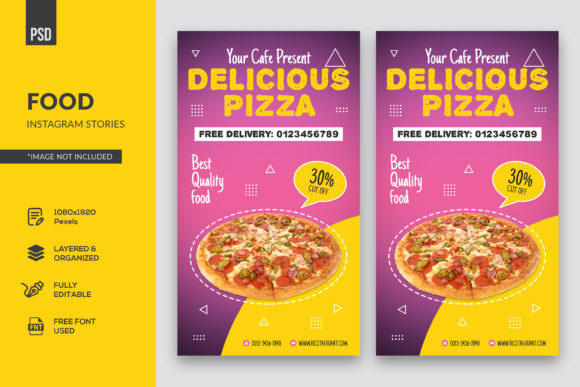
Streamlining Visual Storytelling: A Practical Guide to the Food Stories Template
In the fast-paced world of digital content creation, the gap between a great idea and a published asset often comes down to workflow efficiency. For professionals ranging from social media managers and food bloggers to small business owners and freelance designers, the pressure to produce high-quality vertical content is constant. This is where a structured resource like the Food Stories template becomes more than just a design file; it transforms into a critical component of a broader production pipeline. By leveraging a pre-organized, fully editable framework, creators can shift their focus from technical layout struggles to strategic storytelling and brand consistency.
The Food Stories template is specifically engineered for the 1080x1920 px standard, catering directly to platforms like Instagram Stories, TikTok, Snapchat, and Pinterest Pins. However, its value extends far beyond mere dimensions. It represents a systematic approach to visual communication. When integrated into a professional workflow, this tool eliminates the repetitive tasks associated with starting from scratch, allowing teams to maintain a rapid pace without sacrificing aesthetic quality. Whether you are launching a new menu item, documenting a culinary event, or running a seasonal marketing campaign, having a reliable foundation accelerates the entire creative process.
Integrating Design Assets into Your Production Workflow
Adopting a template like Food Stories requires understanding where it fits within your existing operational cycle. It is not merely a final step but a versatile asset that interacts with various stages of project management. Before a project begins, during the execution phase, and even in post-production review, this template serves as a unifying element that ensures consistency across all outputs.
For marketers and entrepreneurs, the planning phase is crucial. Instead of debating font choices or color palettes for every single post, the template provides a predefined structure. This allows you to allocate mental energy toward content strategy—deciding what story to tell and how to engage your audience. The template's organization means that when a突发 news item or a trending topic arises, you can deploy a visually cohesive response almost immediately. This agility is vital in industries where timing dictates reach and engagement.
During the creation phase, the interaction between the template and your source materials is seamless. Because the image containers are built as Smart Objects, the technical barrier to entry is significantly lowered. You do not need to be a Photoshop expert to mask images perfectly or adjust layers without breaking the design. This feature is particularly beneficial for teams with varying skill levels, ensuring that a junior associate can produce work that matches the quality of a senior art director. The result is a streamlined handoff process where ideas move quickly from concept to completion.
Leveraging Smart Objects for Efficiency
The core engine of the Food Stories template is its use of Smart Objects. In a practical sense, this means the image placeholders are dynamic links to external files or embedded layers that retain their original data. When you double-click a placeholder, you can drop in your high-resolution photography, save the file, and watch the template automatically update. This eliminates the tedious process of manual cropping, resizing, and masking.
This functionality supports a high-volume production environment. Imagine a restaurant chain rolling out a new summer menu across fifty locations. Each location has unique photos but needs to adhere to strict brand guidelines. By using the Smart Object feature, a central marketing team can distribute the Food Stories PSD file to local managers. These managers simply swap in their local imagery, and the design integrity remains intact. The shadows, lighting effects, and text positioning adjust automatically, ensuring that every story looks professional regardless of who edits it.
Furthermore, Smart Objects facilitate non-destructive editing. If a stakeholder requests a change in the hero image two days before launch, the swap takes seconds. There is no risk of losing layer styles or accidentally deleting critical design elements. This safety net encourages experimentation, allowing creators to test different visual angles or product shots without fear of ruining the master file.
Organization and Layer Management for Collaborative Teams
One of the most significant friction points in collaborative design is file disorganization. A messy PSD file can stall a project, leading to confusion and errors. The Food Stories template addresses this head-on with a rigorously organized layer structure. Every element is grouped logically and named clearly, making navigation intuitive for anyone opening the file.
For agencies and in-house teams, this level of organization translates to reduced onboarding time. New team members can jump into a project and understand the file architecture immediately. Layers are separated by function—backgrounds, image masks, typography, and decorative elements are distinct. This separation allows for precise control. If a brand manager wants to adjust the opacity of an overlay or change the blending mode of a texture, they can locate that specific group instantly without sifting through dozens of unnamed layers.
This structural clarity also aids in version control. When iterating on designs, having a clean file makes it easier to duplicate groups and create variations. You can quickly generate a "Version A" and "Version B" for A/B testing purposes, keeping the original assets safe. This systematic approach ensures that the creative process remains agile and that no time is wasted hunting for specific elements within the software interface.
Customization and Brand Consistency
While templates provide structure, they must also offer flexibility to accommodate diverse brand identities. The Food Stories template strikes this balance by offering full editability of text, colors, and images. The fonts used are free and linked within the main file, removing the hurdle of font licensing or installation errors. This ensures that the typography renders exactly as intended on any machine where the file is opened.
Color customization is equally straightforward. Whether your brand relies on warm, earthy tones for an organic cafe or vibrant, neon hues for a fast-casual burger joint, the color schemes can be adjusted globally or locally. This adaptability means the template can serve as a long-term asset rather than a one-off solution. As your brand evolves, the template evolves with you. You can save multiple versions of the file, each tailored to different campaigns, seasons, or product lines, while maintaining a consistent underlying grid and layout logic.
Consistency is key to building brand recognition. By using the same structural template across hundreds of stories, you create a visual rhythm that your audience subconsciously recognizes. This familiarity builds trust and professionalism. When users scroll through their feeds, they instantly identify your content before even reading the text. The Food Stories template facilitates this repetition without inducing creative fatigue, as the variable elements (images and copy) keep the content fresh while the framework remains stable.
Practical Implementation Strategies for Various Roles
Different professionals will integrate the Food Stories template into their workflows in unique ways. Understanding these use cases helps maximize the return on investment for the tool.
- Content Creators and Influencers: For individuals managing their own brands, time is the most scarce resource. Use the template to batch-create content. Dedicate one hour on Monday to swap out images for the entire week. The organized layers allow you to work rapidly, ensuring you never miss a posting schedule.
- Social Media Managers: When managing multiple client accounts, consistency and speed are paramount. Create a master folder for each client containing the customized Food Stories file. Use the Smart Objects to quickly ingest client-provided assets and deliver proofs within hours rather than days.
- Restaurant Owners and Chefs: You may not have a dedicated design team. This template empowers you to create professional-grade announcements for daily specials or events directly from your phone or tablet (using compatible apps) or a simple desktop setup. The ease of use removes the need to hire external designers for routine updates.
- Educators and Bloggers: Use the template to break down complex recipes or culinary techniques into digestible story slides. The clear hierarchy of text and image zones helps guide the viewer's eye, making educational content more effective and engaging.
Implementing this tool also involves establishing a quality control routine. Even with a template, it is essential to review the final output on actual devices. Check how the text overlaps with profile icons or interactive stickers on platforms like Instagram. The 1080x1920 px resolution ensures sharpness on retina displays, but context matters. Always preview your stories in the native environment to ensure that call-to-action buttons are visible and that critical information isn't obscured by UI elements.
Long-Term Value and Scalability
The true measure of a design asset is its longevity. The Food Stories template is built for long-term use. Its reliance on standard RGB color profiles and 72dpi resolution ensures compatibility with all digital screens. As design trends shift, the fundamental utility of a well-organized grid remains relevant. You can update the decorative elements or swap out fonts seasonally while retaining the core structure that your audience recognizes.
Scalability is another major advantage. As your business grows and your content volume increases, this template scales with you. You can create衍生 templates based on the original master—perhaps one for quotes, one for product showcases, and one for behind-the-scenes content—all sharing the same DNA. This creates a cohesive visual ecosystem that strengthens your brand identity across all touchpoints.
In conclusion, the Food Stories template is more than a collection of layers and smart objects; it is a strategic tool for modern content creation. By simplifying the technical aspects of design, it empowers professionals to focus on what truly matters: connecting with their audience through compelling visuals and narratives. Whether you are a solo entrepreneur or part of a large marketing agency, integrating this organized, flexible, and efficient resource into your workflow will yield tangible improvements in productivity, consistency, and overall content quality. Embrace the structure, leverage the smart features, and let your creativity flow within a framework designed for success.